Type for Doctors and Lawyers, Not for Podcasts
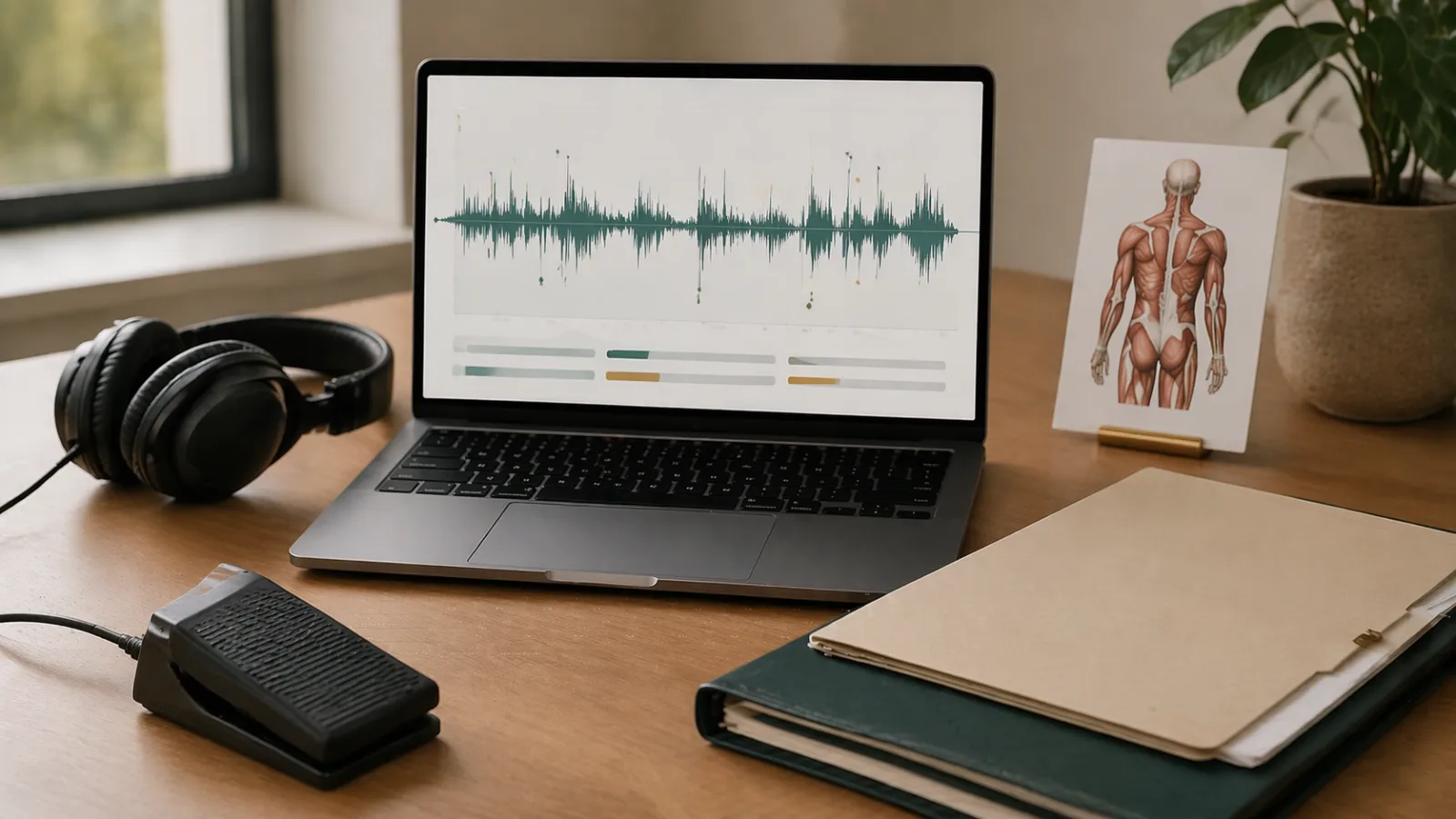
When I first looked at transcription in 2023, the rates on general platforms were already broken. Twelve cents per audio minute, competing with Whisper for work a machine did in seconds. I almost walked away from the category entirely. Then a contact in a legal office told me her chambers still paid a human 1.30 euros a minute for verified depositions, because an AI slip on a quoted clause had cost them a hearing. That was the door I walked through.
Why the niche version survived AI
Generic transcription is a solved problem for machines. The niche versions are not, because the cost of an error is asymmetrical. A medical report that says *20 milligrams* when the clinician said *twenty two* is a prescribing error. A deposition that misquotes a defendant by one word is a filing problem. Platforms that serve hospitals and law firms keep a human in the loop not out of habit, but because their clients refuse to sign off on unverified output. The work is now closer to editing than to typing, but the human seat remains.
Where the work actually sits
- Medical transcription platforms: three to four established vendors serve private clinics and teleradiology groups. Entry is gated by a terminology test of 40 to 60 terms, usually unpaid, 60 to 90 minutes long.
- Legal transcription platforms: two main networks in the European market, one UK centric, one pan European. Both require a short style test on court formatting conventions.
- Direct to firm work: the highest rate, typically 1.20 to 1.60 euros per audio minute, but only after a year of platform track record and a personal introduction. I got my first direct contract through a LinkedIn connection who needed overflow support for a three week case.
- Pharmaceutical research transcription: the rarest and highest paying tier, clinical interview coding for research firms, 2.00 euros per audio minute. I have only seen three invitations in two years.
The rates I actually cleared
In my first three months on a legal platform, I transcribed 46 short depositions and 12 interview segments. Gross earnings came to 1,840 euros across 72 logged hours, for an average of 25.50 euros an hour. The range was 19 euros an hour on a long messy recording with three speakers, up to 34 euros an hour on a clean two speaker interview in a well lit office. On medical work the average was lower at 22 euros an hour, because the terminology density slowed me down; that gap closes after six months.
For the comparison against other microtask rails I run in parallel, the Prolific vs Userlytics piece sets the baseline; transcription clears that baseline cleanly from month two. For a higher rate path I also work in rotation, see how I got into AI rater gigs. Both live on the same Freelance hub.
The six week ramp that actually worked
Week one and two, I built my own glossary of 400 medical abbreviations and 180 legal terms, using open access medical dictionaries and publicly available court transcripts. Week three, I passed the terminology test on a legal platform on the second attempt. Week four, I took only short five minute files to calibrate my foot pedal workflow and keyboard shortcuts. Week five and six, I extended to twenty minute depositions and started tracking a cost per error metric. Anything above one correction per thousand words on my own review cut the file and made me slow down the next one. Six weeks from first glossary card to 22 euros an hour is realistic. Two weeks is not.
The discipline of a shadow glossary and a correction ledger is the same discipline that keeps my betting spreadsheet honest; see the closing line value piece for the sibling logic on a different rail.
Buy a 40 euro foot pedal before a fancy keyboard
A cheap USB foot pedal for transcription playback, roughly 40 to 60 euros on the second hand market, lifted my real hourly rate by 18 percent inside two weeks. It lets your hands stay on the keyboard while your foot controls rewind and play. Every transcriptionist I know who earns above 25 euros an hour uses one. Fancy keyboards are nice; a foot pedal is the upgrade that pays itself back the first week.
Do not accept files with more than three speakers or with background noise rated *heavy* by the platform, in your first sixty days. One rushed three speaker court recording with mumbling dropped my quality score and cost me two weeks of premium invites. Stick to clean two speaker files while you calibrate. The pay per minute is the same; the hourly rate is not.
Frequently asked
Do I need a medical or legal background to start?
Not a degree, but you need a glossary habit. I built my own reference list of 400 medical abbreviations over six weeks, and a separate list of 180 legal terms. Platforms test you on terminology before they let you near paid work, so a weekend of glossary drill is the real entry ticket.
What hourly rate is realistic in the first three months?
Expect 14 to 18 euros an hour on general transcription, and 22 to 32 euros an hour on medical or legal once qualified. My first month on a legal platform cleared 19 euros an hour while I was still slow; by month three I stabilised at 28 euros an hour on short depositions.
Is AI transcription killing this gig?
It killed the bottom tier. Generic twelve cent a minute work is gone. The niches survived because a missed medication name or a misquoted clause in a deposition has real liability, and platforms still pay a human to verify every line. The work shifted from typing to editing and quality control.